
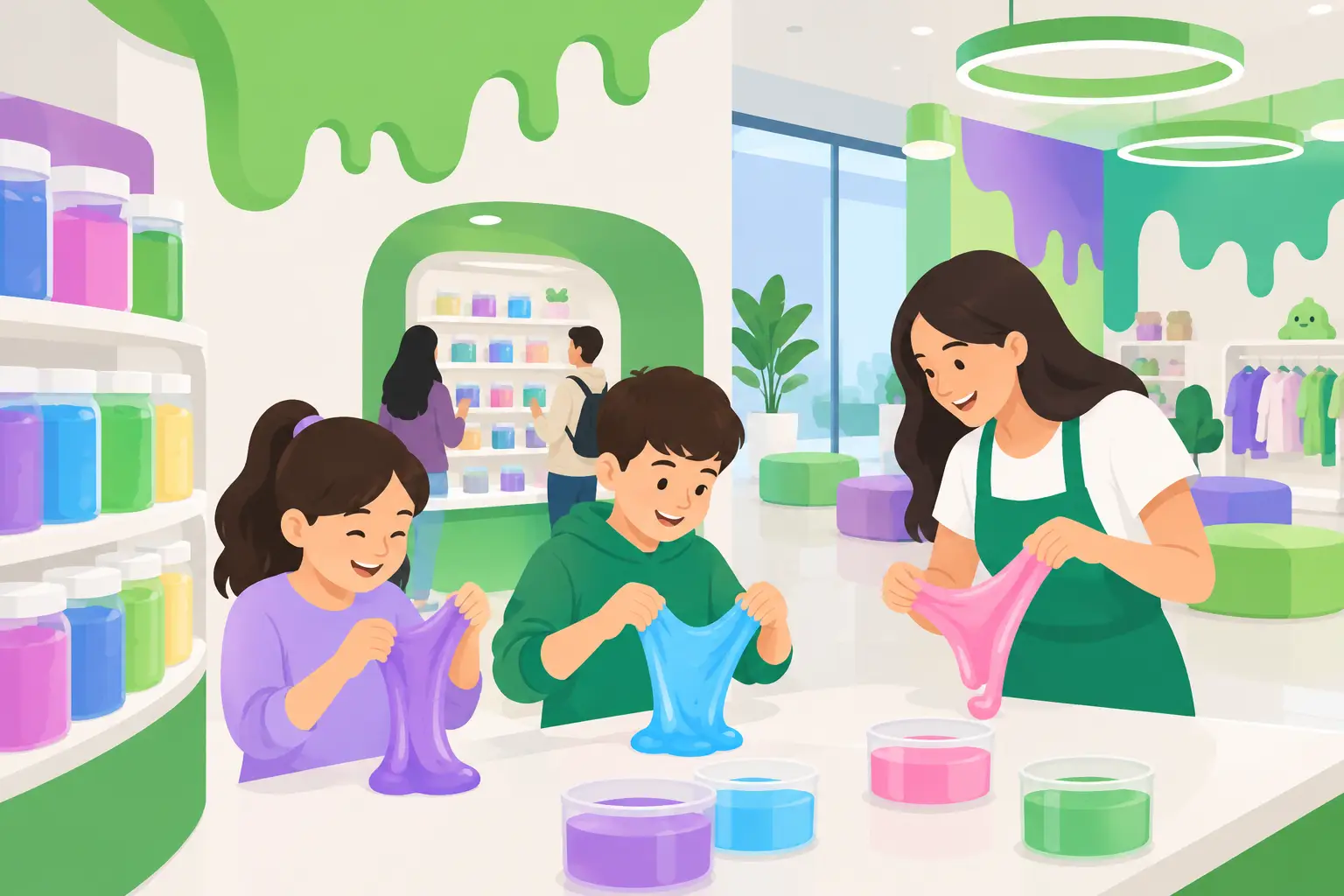
A slime franchise is not built around selling a jar of goo from a shelf. It is built around the moment a child picks a color, adds a scoop of texture, chooses a scent, and stretches their finished creation for the first time. That moment is joyful, screen-free, highly personal, and worth leaving the house for.
For entrepreneurs looking at experiential retail, that difference matters. Families are still shopping, gathering, celebrating, and looking for easy ways to make a regular Saturday feel special. A hands-on slime studio can meet them right where they are: at the mall, after school, during a birthday party, or in search of a playdate that does not require weeks of planning.
What Makes a Slime Franchise Different?
Traditional retail depends heavily on product transactions. A customer comes in, chooses an item, pays, and leaves. An experiential slime business creates more reasons to stay, return, celebrate, and tell friends about it. The product is part of the fun, but the experience is the real destination.
Guests do not simply buy slime. They mix, stretch, squish, scent, decorate, and name a creation that is completely their own. The activity is easy to understand, yet open-ended enough that no two visits have to feel alike. A fluffy cloud slime, a crunchy bead-filled batch, or a glittery themed creation can turn into a tiny masterpiece with a big personality.
That built-in customization gives the concept a natural advantage. Kids feel ownership over what they make. Parents appreciate an activity with structure. Hosts get an event that keeps a group engaged. And franchise owners have a business with multiple ways to serve the same community.
The Experience Is the Product
The strongest experiential concepts give people a reason to put down their phones and participate. Slime-making checks that box with color, texture, scent, sound, and movement. It is sensory play with a social side, and it creates an instant take-home souvenir.
For families, the appeal is wonderfully simple. There is no need to set up a craft table at home, hunt down supplies, or worry about cleaning glitter out of the carpet. Guests arrive, choose their ingredients, get guided help from the team, and leave with their creation. The best version of the experience feels playful for kids and refreshingly easy for the adults bringing them.
That convenience is especially valuable in a busy retail environment. A family might walk in while browsing the mall, reserve a station for a weekend outing, or plan a full party around the activity. The format can support spontaneous visits and scheduled occasions, which helps create a broader flow of demand than a single-purpose event venue.
Revenue Can Come From More Than Walk-Ins
A slime studio has the potential to earn across several occasions, rather than relying on one type of guest. Walk-in experiences can introduce the brand to new families, while parties and group reservations can create higher-value bookings. The right operating model may also include themed workshops, school outings, camps, corporate team events, seasonal programs, and retail product sales.
That variety is exciting, but it also requires thoughtful execution. Birthday parties need clear packages, dependable staffing, and a smooth check-in process. School groups require capacity planning and age-appropriate structure. Walk-in traffic depends on location, visibility, local mall activity, and the team’s ability to make passersby want to join the fun.
A franchise model can help bring consistency to those moving parts. Instead of starting from a blank page, owners may receive an established playbook for the guest experience, store design, materials, training, marketing standards, and party operations. That does not remove the work of running a local business, but it can reduce some of the guesswork that comes with creating a new entertainment concept from scratch.
Why Malls and Community Hubs Make Sense
Experiential retail thrives where people already gather. Shopping malls, lifestyle centers, and active community destinations can give a slime-making business access to families who are already looking for food, shopping, entertainment, or a way to fill an afternoon.
For property owners, a hands-on activity can also add energy to a retail mix. It creates movement, laughter, party traffic, and a reason for families to extend their visit. A guest who comes for a slime session may also stay for lunch, browse nearby stores, or return later with friends.
Still, location is never just about foot traffic. The best site depends on the local family population, nearby schools, party competition, lease terms, parking, visibility, and the overall character of the property. A high-traffic location can be a win, but only if the audience matches the experience and the economics make sense.
The Right Owner Brings the Energy
A slime franchise is not necessarily the right fit for someone seeking a hands-off investment. This is an experience business. The details matter: a welcoming team, clean workstations, fresh supplies, upbeat party hosts, organized reservations, and a space that looks as good in a parent’s photo as it feels in person.
The strongest owners tend to enjoy people, understand local community-building, and see the value in repeat visits. They know that a child’s birthday party is not just a transaction. It is a milestone. A rainy-day walk-in is not just a sale. It is a family memory. A successful studio treats those moments with care while also running with discipline behind the scenes.
Staffing deserves particular attention. Great team members do more than hand out ingredients. They encourage shy guests, manage group energy, keep the experience moving, protect safety and cleanliness standards, and make every child feel like a slime expert. Training can support that consistency, but culture has to be built locally.
Questions to Ask Before Choosing a Slime Franchise
Before making any franchise decision, prospective owners should look past the fun factor and ask clear business questions. What does the full investment range look like beyond the initial fee? How are rent, payroll, inventory, insurance, technology, local marketing, and working capital expected to affect the business? What kind of training and opening support is included?
It is also smart to understand how the brand approaches territory, site selection, vendor relationships, product sourcing, and seasonal demand. Ask how parties are priced, what the typical reservation process looks like, and how franchisees are supported when local conditions change. Review all required franchise disclosure materials carefully, speak with qualified legal and financial advisors, and, when appropriate, talk to current operators about the day-to-day reality.
The goal is not to chase a trend. It is to find a concept with enough creative sparkle to draw guests in and enough operational structure to keep them coming back.
A Brand Can Turn Slime Into a Destination
The Slime Kitchen shows how a simple sensory activity can become a polished destination for families, parties, and group events. When the environment feels bright, guided, and shareable, slime shifts from a craft supply into an outing people plan for.
That distinction can matter in a crowded entertainment market. Families have choices, and the experiences that stand out usually make the decision easy: the activity is engaging, the process is convenient, the setting feels special, and every guest leaves with something they made themselves.
For an entrepreneur, the opportunity is not just in the stretch and squish. It is in creating a local place where creativity becomes a celebration, strangers become repeat guests, and ordinary afternoons leave with a little more color on them.