
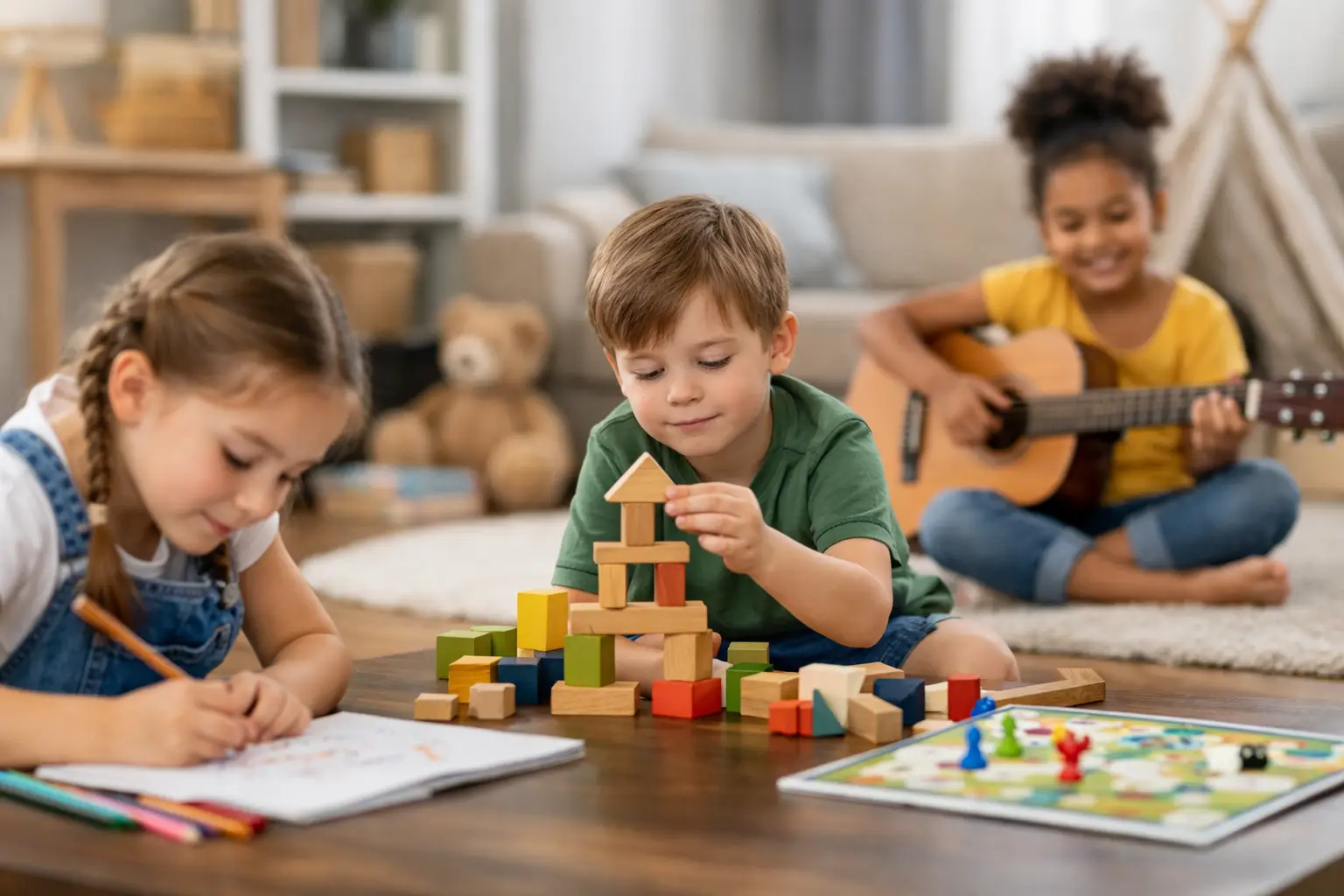
The moment a room gets too quiet, most parents know what comes next – someone is either scrolling, tapping, or asking for a screen. That is exactly why screen free activities for kids matter so much. Not because screens are always bad, but because kids still need chances to make, move, squish, build, imagine, and get a little gloriously messy.
The sweet spot is not forcing some perfect, old-school afternoon with zero complaints. It is finding activities that actually hold a child’s attention long enough to feel fun, not like a substitute. The best ones give kids something to do with their hands, a little freedom to make choices, and a clear payoff they can see, touch, or show off when they are done.
Why screen free activities for kids work so well
Screens are designed to keep kids engaged with constant novelty. Real-world play has to compete with that, so the activities that work best usually have one of three things: sensory feedback, movement, or creativity. When kids can stretch dough, race through an obstacle course, build a blanket fort, or mix colors into a new creation, they get instant satisfaction in a different way.
There is also a mood factor parents know well. A child who has been sitting still with a device for too long may not need another quiet activity. They may need to jump, carry, sort, pour, or make something from scratch. On the other hand, after a loud school day, some kids want calm tactile play that lets them settle without zoning out in front of a screen. It depends on the child, the time of day, and how much setup you realistically want to handle.
15 screen free activities for kids that actually keep them busy
1. Sensory slime making
This is the kind of activity that checks every box – hands-on, creative, colorful, and deeply satisfying. Kids can mix, stretch, swirl, and customize textures with glitter, charms, beads, scents, and colors. It feels part craft, part science experiment, part collectible creation.
The reason it works so well is simple: kids are not just watching something happen. They are making every choice as they go. For families who want an outing built around that same energy, a guided slime-making experience can turn a regular afternoon into something memorable without parents having to prep every ingredient at home.
2. Indoor obstacle courses
If your child is bouncing off the couch anyway, give that energy somewhere to go. Use pillows, tape lines on the floor, stools, laundry baskets, and tunnels made from blankets. Suddenly the living room becomes a challenge zone.
This one is especially good for younger kids who need movement before they can focus on anything else. Older kids often get more into it when they can help design the course and time each other.
3. DIY art stations
Set out paper, stickers, markers, tape, pom-poms, washable paint, and child-safe scissors, then let kids lead. Not every activity needs a polished final product. Sometimes the magic is in the freedom to cut, glue, layer, and invent.
The trade-off is cleanup. If that is a dealbreaker on a busy weekday, limit the materials or place everything on a tray. You still get the creative payoff without turning the kitchen table into a full-time craft zone.
4. Baking simple treats
Baking is a screen-free win because kids can pour, stir, scoop, decorate, and taste the result. Even very simple recipes feel exciting when children get ownership of one part, like mixing batter or adding sprinkles.
It also builds patience in a surprisingly natural way. Kids have to wait for something to bake or cool, and that little pause can make the final reveal feel even bigger.
5. Treasure hunts
A treasure hunt instantly adds drama to an ordinary afternoon. Hide small objects or clues around the house, then create a path kids can follow. You can make it silly, themed, or educational without making it feel like homework.
For playdates and parties, this is one of those activities that scales well. A few clues can keep a whole group moving and laughing without much equipment.
6. Fort building
Blankets, couch cushions, clips, and dining chairs still have incredible range. A good fort turns a familiar room into a brand-new world. Once it is built, kids usually keep playing inside it far longer than expected.
That is part of the appeal. The setup becomes the activity, then the fort becomes a reading nook, pretend café, hideout, or movie-free chill zone.
7. Nature collecting walks
When kids need a reset, a walk with a mission works better than a walk with no point. Ask them to collect leaves, smooth rocks, pinecones, or flowers that have already fallen. Give them a bag or small basket and suddenly the whole outing feels more purposeful.
Once you are home, those finds can become an art project, sorting game, or display tray. It stretches one activity into two.
8. Playdough or clay creations
Not every sensory activity needs to be elaborate. Playdough and clay are easy wins because they are open-ended and reusable. Kids can roll, pinch, flatten, stamp, and sculpt for long stretches of time.
This is a great quieter option for after school or rainy afternoons. It feels calming, but still active enough to hold attention.
9. Kitchen science experiments
Think baking soda fizz, sink-or-float tests, color mixing, or homemade volcanoes. Kids love the reveal, but what keeps them engaged is being part of the process. They get to predict, pour, and react.
The best version is not overcomplicated. A simple experiment with a strong visual payoff usually beats a complicated one with too many steps.
10. Story basket challenges
Fill a basket with random items like a toy animal, scarf, spoon, block, paper crown, and flashlight. Then ask kids to make up a story using everything inside. It is part imaginative play and part improv game.
This works especially well for siblings with different ages because each child can contribute at their own level. One might act, one might narrate, one might decorate the scene.
11. Dance freeze parties
When attention spans are short, quick wins matter. Turn on music, dance hard, then freeze when the sound stops. It is simple, active, and always a little chaotic in the best way.
You can layer on themes like animal movements, superhero poses, or silly walks if kids need fresh inspiration.
12. Cardboard box builds
Big boxes are basically kid gold. They can become rocket ships, food trucks, dollhouses, puppet theaters, or pet hotels with just markers, tape, and imagination.
Parents sometimes underestimate how long this one lasts. A box project often keeps evolving over several days, which makes it one of the better high-value activities from a time-spent perspective.
13. Puzzle and game tables
A dedicated game or puzzle table can be a smart low-pressure setup. Instead of announcing a structured activity, just leave something inviting out where kids can return to it on their own.
This approach works best for kids who resist being told what to do but will happily drift toward something interesting if it is already there.
14. Water play with a twist
Water cups, measuring spoons, funnels, sponges, toy animals, and containers can keep kids busy for ages, whether it is at the sink, in the tub, or outside. Add food coloring or ice cubes and it feels fresh again.
This is one of the easiest sensory activities for preschoolers, though older kids may want a challenge layered in, like transferring water with only a sponge or building a washing station for toys.
15. Make-and-take craft outings
Sometimes the best move is getting out of the house and letting someone else handle the setup. Kids often stay more engaged when the activity feels like an event, not just another option in the playroom. A make-and-take experience gives them the hands-on fun they want and a finished creation to bring home.
That is part of why places like The Slime Kitchen click with families. Kids get to mix, stretch, squish, personalize, and leave with something they made themselves, while parents get an easier path to a fun memory.
How to choose the right screen free activity for kids
The secret is matching the activity to the moment. If kids are restless, choose movement. If they are overstimulated, choose sensory or quiet creative play. If you need something that feels special enough for a birthday, playdate, or weekend outing, pick an experience with a clear result and a little wow factor.
It also helps to be honest about your own bandwidth. Some days you are ready for paint and mixing bowls. Other days you need something almost zero-prep. Screen-free does not have to mean high effort. It just has to give kids something real to do.
Parents often put pressure on themselves to entertain nonstop, but that is not really the goal. The goal is to create openings where kids can get curious, use their hands, and feel absorbed in something beyond a device. A few go-to activities can change the whole tone of an afternoon.
The next time boredom shows up fast and loud, lean into activities that let kids make, move, and mess around a little. Those are usually the moments they remember most.