
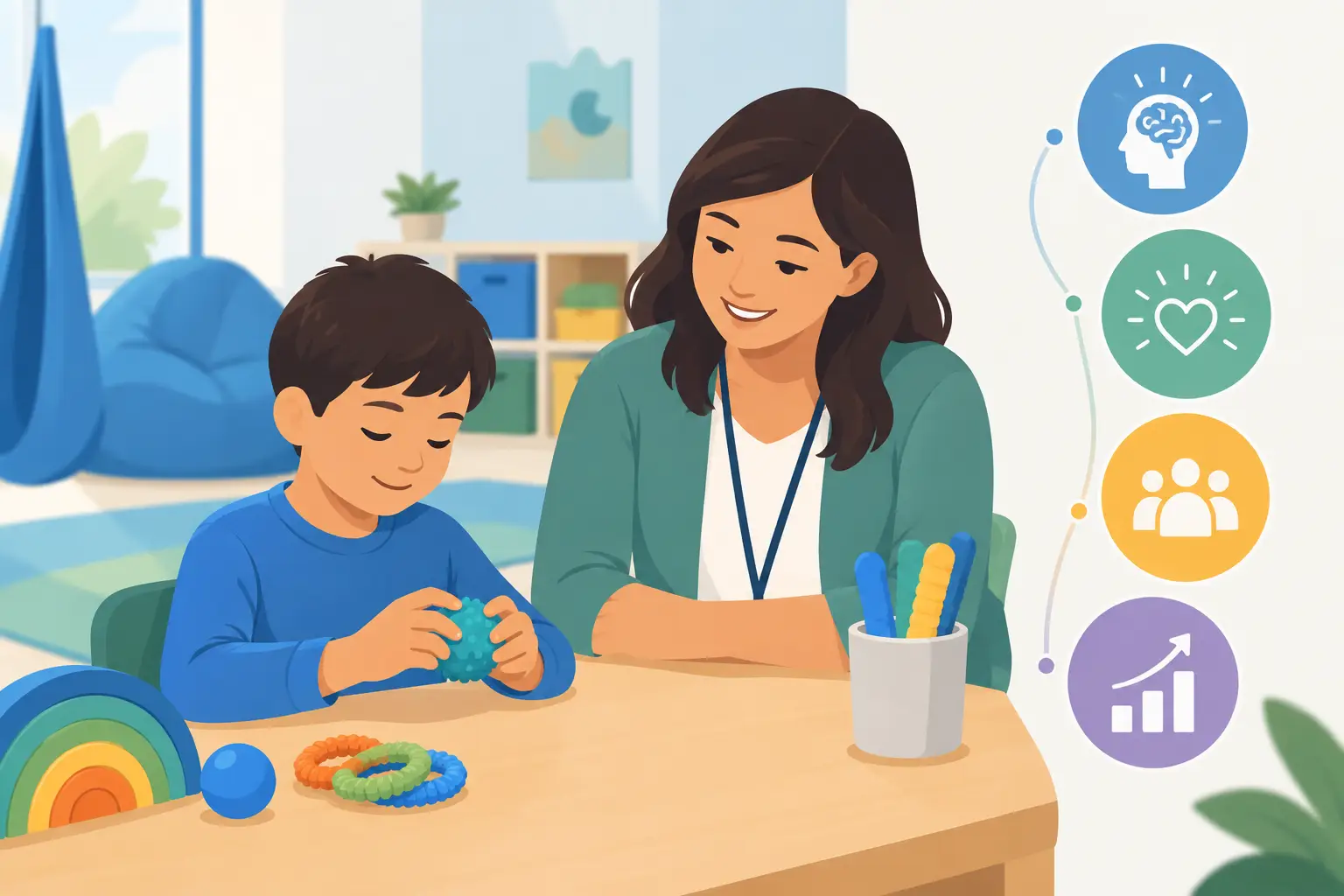
A student who arrives buzzing with energy does not always need a lecture, a worksheet, or another reminder to sit still. Sometimes they need a purposeful chance to mix, stretch, squish, create, and reset. The best school sensory program outcomes are not about keeping kids busy. They are about creating a structured, joyful experience that helps students feel ready to participate.
For schools, sensory programming can bring something special to the calendar: a screen-free activity that feels like a treat while supporting social connection, creative confidence, and classroom-ready routines. Think less “free-for-all craft table” and more guided hands-on experience with clear steps, quality materials, and a take-home creation students are proud to show off.
What School Sensory Program Outcomes Can Look Like
Sensory programs can support different goals depending on the age group, setting, schedule, and activity design. A kindergarten class may benefit most from practicing turn-taking and following simple directions. A fifth-grade group might light up when given room to personalize colors, textures, scents, and mix-ins while collaborating with friends.
That is why success should not be measured by one big promise. It is better measured through the small moments educators and families can see: students joining in, sharing materials, trying a new texture, talking about what they made, and moving back into the day with a little more ease.
More engaged participation
Hands-on activities give many students a different way into learning and group participation. When there is something to touch, shape, choose, and create, the invitation feels immediate. A student who is hesitant to speak in front of the class may happily explain why they picked a cloud-like texture or a bright neon color.
Engagement does not mean every child will love every sensory material. Some students prefer less sticky textures, quieter stations, gloves, or the option to observe first. A thoughtfully run program makes room for those preferences without putting anyone on the spot. Choice is part of the outcome.
Stronger social connection
Sensory play has a natural way of getting conversations started. Kids compare colors, trade ideas, admire charms, and laugh when a mix-in makes a surprising crunch or pop. Those little exchanges can help school groups connect beyond their usual friend circles.
The structure matters here. If students are guided through a shared experience with enough materials, clear boundaries, and age-appropriate timing, the activity can encourage cooperation rather than competition. They learn that someone else’s purple glitter slime does not need to look like theirs to be cool.
Creative confidence that travels home
There is real value in making something that is unmistakably yours. When students choose a base, color, scent, texture, and finishing touches, they practice decisions from start to finish. Then they leave with a creation they can hold, share, and remember.
That take-home piece also gives families a window into the school day. Instead of hearing “nothing” when asked what happened at school, a child can pull out their creation and tell the story: what they mixed, who sat nearby, what texture they liked best, and what made everyone laugh.
Why a Guided Format Makes a Difference
Sensory play can get messy. That is part of the magic. But a successful school program should feel organized, not chaotic.
Guided experiences give students a clear path from “What do I do?” to “Look what I made!” They also help teachers and school event organizers manage a big group without turning the activity into one more logistical puzzle. Stations, instructions, supplies, cleanup plans, and staff support all shape the experience.
At The Slime Kitchen, that guided creative energy is central to the fun. Students can enjoy the big sensory moment of making custom slime while adults can appreciate a polished, facilitated activity built for groups. It is a great fit for school celebrations, enrichment days, reward events, PTO programming, and field trip-style outings.
A guided format can also create a gentler experience for students who do best when they know what is coming next. A simple sequence such as choose, mix, decorate, name, and pack makes the activity feel exciting without being overwhelming.
Sensory Outcomes Are Not One-Size-Fits-All
It is tempting to describe sensory activities as a cure-all for focus, behavior, or big feelings. Schools should be careful with that language. A fun slime-making workshop is not therapy, and it should not replace individualized support or accommodations a student already needs.
What it can do is offer a positive shared experience that includes tactile exploration, creativity, and connection. For some students, that may mean a chance to settle into an activity. For others, it may mean practicing choices, joining peers, or simply having an awesome time at school.
Age, sensory preferences, allergies, classroom needs, and event goals all matter. Before booking or planning, school teams should consider the group size, available space, schedule, supervision, and whether students need alternative materials or participation options. The strongest programs are designed with real students in mind, not a generic idea of what kids enjoy.
How Schools Can Measure Meaningful Results
You do not need a giant assessment packet to understand whether a sensory event worked. A few practical observations can tell a useful story.
Look at participation. Were students willing to try the activity? Did they stay engaged through the guided steps? Notice social behavior, too. Did students exchange ideas, wait for turns, offer help, or celebrate one another’s creations?
Teacher and chaperone feedback adds another layer. After the event, ask whether the experience was easy to facilitate, whether the pace worked for the group, and whether students had a positive transition back to class or the next activity. Families can also share what happened after school: Did their child talk about the experience? Did they proudly show off what they made?
For school leaders, the operational result counts as well. A program may be creative and exciting, but it also needs to fit the day. Did it start on time? Was the group supported? Was cleanup manageable? Did students leave with a finished project? Those details are what turn a fun idea into a repeat-worthy tradition.
Make the Experience Feel Special, Not Extra Work
School events compete with packed calendars, limited staff time, and a wide range of student needs. The right sensory program should lower the planning burden while raising the excitement level.
Choose an experience with a clear run-of-show, capable facilitators, materials that are ready to go, and a format that gives each student a role. If you are hosting a larger group, ask how students will rotate, how long the activity takes, and what happens if a child prefers not to touch a particular material. Those answers matter as much as the color palette.
Theme can help, too. A seasonal color story, school-spirit mix-ins, or a reward-day concept can make the activity feel like an event instead of another station. The goal is not to overcomplicate it. The goal is to give students a memorable moment they can make their own.
A Little Mess Can Create a Big Memory
The most meaningful school sensory program outcomes often show up after the supplies are packed away. They show up in the student who says, “Mine is butter slime!” with total pride. In the friends who leave comparing textures. In the teacher who sees a group come together over something playful, hands-on, and different from the usual day.
When sensory play is thoughtfully guided, it gives kids permission to create, connect, and enjoy the kind of colorful, squishy fun that makes school memories stick.