
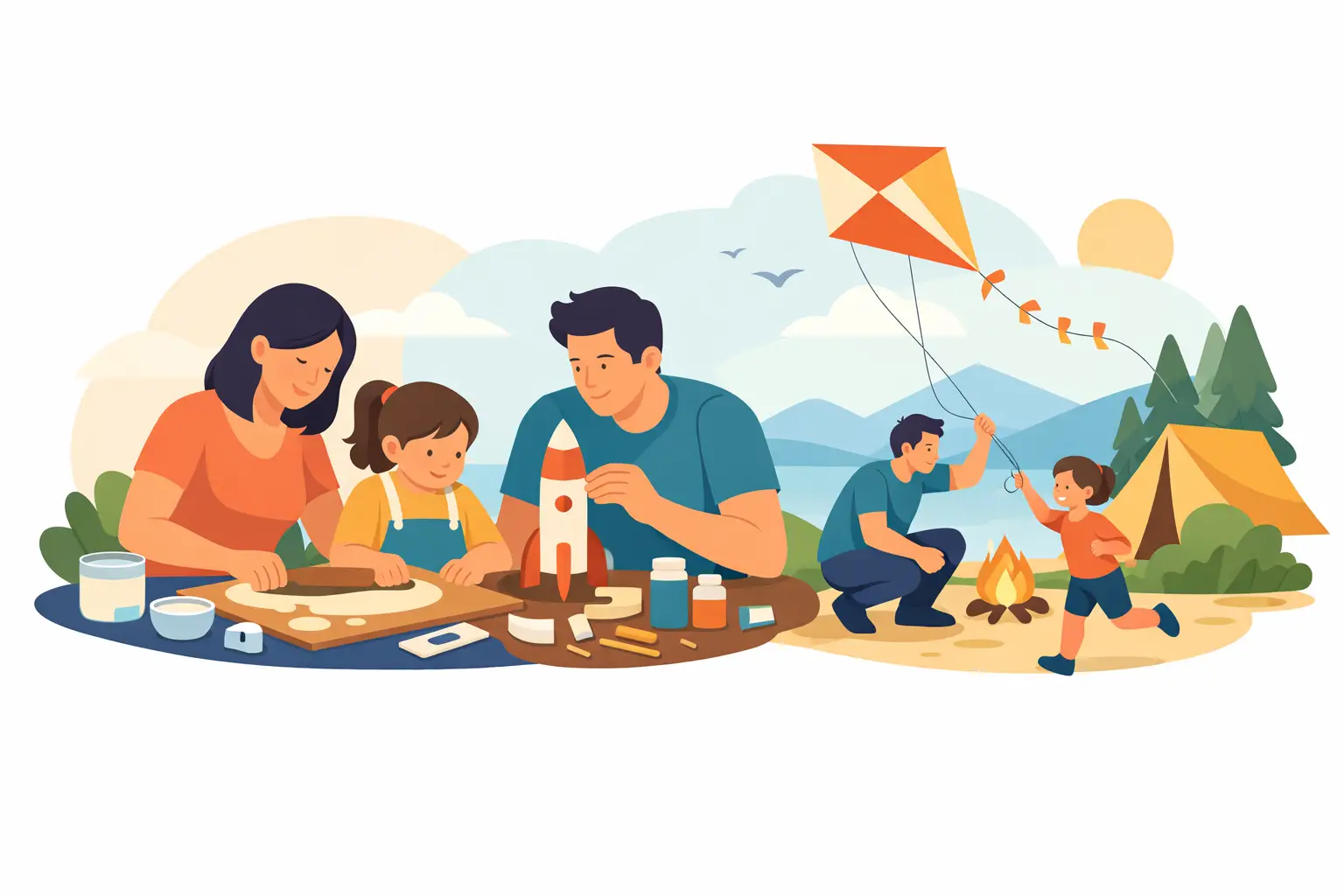
A rainy Saturday can turn into a full-on negotiation: one child wants a screen, another is already bored, and you need an outing that feels worth leaving the house for. The best hands on family activities change that energy fast. They give everyone something to touch, make, laugh about, and bring home – without requiring weeks of planning or a car full of supplies.
The real magic is not just keeping kids busy. It is creating the kind of shared moment that gets retold at dinner: the neon-pink creation that smelled like cotton candy, the tower that almost reached the ceiling, the cookie that came out wonderfully lopsided. When families make something together, the experience lasts longer than the activity itself.
Why hands-on family activities feel so good
Kids spend plenty of time being told what to do, where to sit, and when to move on. A hands-on experience gives them a little ownership. They can choose a color, test a texture, solve a problem, and proudly say, “I made this.” That creative control matters, especially for preschoolers and elementary-aged kids who are building confidence through play.
Parents get something valuable, too: a chance to be present without having to invent the entire afternoon. The strongest activities have enough structure to make the experience easy, with enough room for personalities to show up. Your careful planner might measure every ingredient. Your sensory seeker might squish, stretch, and mix until the texture is just right. Both are fully in the moment.
There is also a practical upside. Making, building, baking, and experimenting naturally support fine motor skills, communication, patience, and flexible thinking. No one needs to turn a family outing into a lesson plan. The learning is already happening while everyone is having fun.
Choose an activity with a real role for everyone
A common family-fun mistake is choosing something that is technically for kids but leaves adults standing nearby, holding coats and checking the time. Look for activities where every person can participate at their own level.
For younger children, that might mean pouring, pressing, sorting, or choosing colors. Older kids often want a bigger challenge, such as designing a theme, following a recipe, building a structure, or helping younger siblings. Adults can join as co-creators rather than directors. The goal is not a perfect final product. It is the back-and-forth that happens while making it.
Age gaps do not have to ruin the plan. They simply change what “participation” looks like. A kindergartener may choose glitter while a middle-schooler experiments with texture combinations. One family member may do the mixing while another names the creation. Give everyone a job, then let the activity get delightfully messy.
6 hands-on family activities that earn the outing
1. Make a sensory creation together
Slime-making has staying power because it is part craft, part science experiment, and part satisfying sensory play. Families can start with a base, then customize color, scent, texture, charms, and mix-ins. The choices are the fun: fluffy or glossy, bright or pastel, fruity or sweet, sparkly or packed with crunch.
A guided slime experience is especially helpful when you want the creative payoff without turning your kitchen table into a cleanup project. At The Slime Kitchen, families can mix, stretch, squish, and personalize their own creations in a polished, high-energy setting. Everyone leaves with a take-home memory that feels completely their own.
2. Build something that has a deadline
A timed building challenge adds just enough friendly chaos to get the whole family laughing. Use blocks, recycled materials, magnetic tiles, cardboard, or even cups. Pick a mission: build a pet palace, a bridge that holds a toy car, or the tallest tower possible in 10 minutes.
The deadline keeps the activity moving, but avoid making it overly competitive. Kids who do not love “winning” still enjoy contributing ideas, gathering materials, or decorating the final build. Take a photo before the grand collapse. That is part of the tradition.
3. Cook one wildly customizable treat
Baking is more fun when the finished food has room for personality. Think mini pizzas, decorated cookies, snack boards, taco bars, or build-your-own parfaits. A single shared recipe is easier on parents than preparing several separate dishes, and customization gives kids a reason to stay engaged.
Give children clear, safe jobs based on their age. Younger kids can sprinkle toppings or stir. Older children can read directions, set timers, and handle more detailed assembly. Expect extra sprinkles on the floor and a few unconventional flavor combinations. A little imperfect is exactly right.
4. Turn your neighborhood into a photo quest
A photo scavenger hunt makes an ordinary walk feel like an assignment from a secret creative agency. Make a short prompt list: something heart-shaped, something tiny, a funny shadow, three things in the same color, or a picture that looks like an album cover.
This works particularly well for families with older kids who may claim they are “too old” for a scavenger hunt. Hand them the camera role or invite them to create the prompts. The result is movement, observation, and a collection of photos that captures your family’s sense of humor far better than another posed portrait.
5. Host a mini maker night
Set up a few supplies and one simple creative prompt. Make friendship bracelets, paint tiny canvases, decorate tote bags, create paper puppets, or design postcards for relatives. Keep the materials limited so the choices do not become overwhelming.
Maker nights work best when nobody is asked to be an expert. Play music, put snacks in the middle of the table, and allow projects to go in unexpected directions. If someone decides the original prompt is boring and invents a completely different craft, that is creative confidence at work.
6. Try a family experiment
Experiments have instant built-in drama: What will happen? Will it work? Can we make it bigger, faster, or fizzier? Choose a simple activity with household-safe materials, such as growing crystals, making a baking soda and vinegar reaction, testing what floats, or creating a color-mixing station.
The best part is the conversation after the reveal. Ask what everyone noticed, what surprised them, and what they would try differently next time. You do not need perfect scientific vocabulary. Curiosity is the whole point.
Make the plan easy enough to actually happen
The difference between a great family activity and a forgotten Pinterest idea is often friction. If gathering materials takes an hour, the activity may never leave the group chat. Choose one main idea, set a realistic time window, and decide in advance how much cleanup you are willing to handle.
For an at-home activity, put supplies out before inviting the kids to the table. For an outing, reserve a time when possible and pair it with something simple, like lunch at the mall or a quick stop for a treat. Avoid overpacking the day. One great experience is more memorable than three rushed ones.
It also helps to manage expectations. Not every child will jump in immediately. Some want to watch first, especially in a new setting or around unfamiliar materials. Give them time, offer a small first choice, and let curiosity do its job. Participation often begins with one tiny scoop of glitter or one cautious fingertip press.
The take-home piece matters
Families are busy, and a great outing can feel over the second you get back in the car. A take-home creation gives the experience another life. Kids can show it to a sibling, place it on a shelf, play with it later, or tell someone exactly how they made it.
That does not mean every activity needs a polished keepsake. Sometimes the take-home item is a photo, a funny video, a new recipe, or a family inside joke. What matters is having a small reminder that says, “We did that together.”
The next time the weekend starts to feel like a blank page, skip the pressure to make it picture-perfect. Pick one thing your family can touch, create, and enjoy side by side. A little color, a little mess, and a lot of shared laughter can turn an ordinary afternoon into the one they keep talking about.