
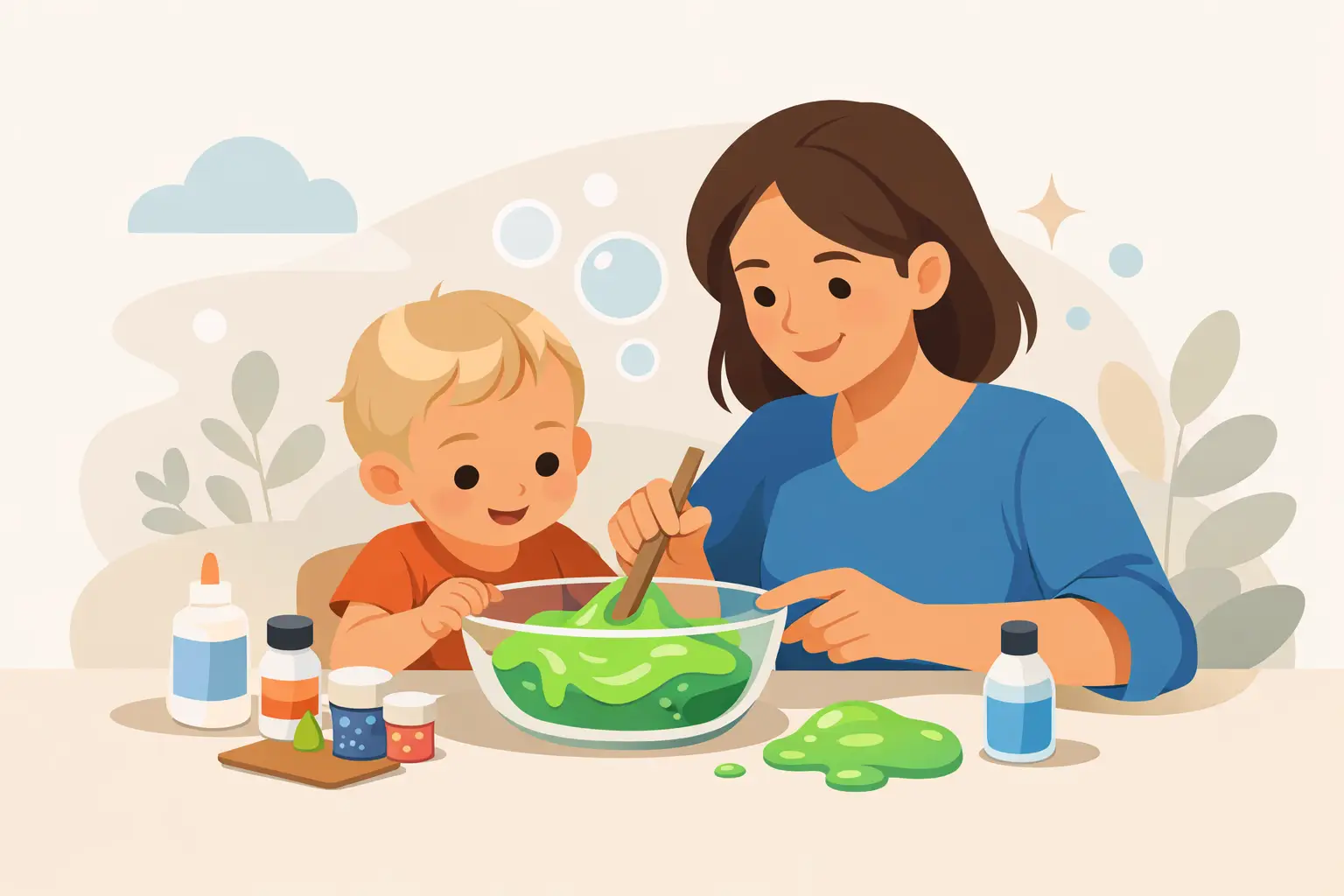
That glossy swirl of color. The first satisfying stretch. The proud little face when a toddler says, “I made it!” Slime can turn an ordinary afternoon into a full-on sensory celebration. But for the youngest makers, the grown-up beside them matters just as much as the glitter, scent, and squish.
Can toddlers make slime safely? Yes, with close adult supervision, simple age-appropriate materials, and a setup that keeps the fun focused on touch rather than taste. Toddlers are natural explorers, which means hands often travel from the slime bowl to their mouths, eyes, hair, and every nearby surface. A few smart boundaries let your family mix, stretch, squish, and smile with far less stress.
Can Toddlers Make Slime Safely at Every Age?
Age makes a real difference. A toddler who is nearly 3 and can follow a simple direction such as “keep slime on the tray” may be ready to help pour, stir, and choose colors. A younger child who still mouths toys, rubs their eyes frequently, or has trouble keeping small items out of their mouth needs a much simpler sensory activity instead.
For children under 3, traditional homemade slime is usually not the best independent activity. Even when the base ingredients are labeled nontoxic, slime is not food. It can pose a choking risk if swallowed in a large amount, and small mix-ins such as beads, charms, foam pieces, glitter, and sequins are not toddler-safe.
That does not mean little ones have to sit out the sensory fun. It means the adult sets the rules and adjusts the experience. Think big, easy-to-handle textures; one child at a time; and hands-on help from start to finish. The goal is joyful participation, not handing over a jar and hoping for the best.
Start With Ingredients That Keep Things Simple
The safest toddler slime session begins before anything gets mixed. Read every package label, use materials only as directed, and avoid treating a craft recipe like a kitchen recipe. If an ingredient is meant for cleaning, laundry, or another household purpose, it does not automatically belong in a toddler activity.
Traditional slime recipes can use glue and an activator. Those materials need adult handling, especially during measuring and mixing. Keep bottles, powders, and concentrated liquids out of reach. A toddler can choose the color or stir a prepared mixture with a sturdy spoon, while the adult manages the actual recipe.
For many families, a ready-made, clearly labeled slime designed for kids is the easier choice. It removes the measuring step, shortens the wait for the fun part, and gives adults fewer loose ingredients to manage. Still, nontoxic does not mean edible, and it does not replace supervision.
Skip fragrance if your child has sensitive skin, asthma triggers, eczema, or a history of reactions to scented products. Bright color can deliver plenty of wow without adding extra variables. If your toddler has a known allergy or a skin condition, check with their pediatrician before introducing a new sensory material.
Keep Mix-Ins Big or Leave Them Out
For older children, mix-ins are where slime gets extra fun: crunchy beads, tiny charms, confetti, glitter, and themed sprinkles. For toddlers, that same pile can become a grab-and-taste hazard in seconds.
Choose one large, non-breakable tool instead, such as a silicone spatula or a large plastic cookie cutter used only with adult supervision. Or let the slime itself be the star. A smooth cloud-like texture, a bold color, and a big stretch are more than enough sensory magic for a young child.
Build a Toddler-Safe Slime Station
A great slime setup is less about perfection and more about containment. Cover a table with a washable mat, tray, or shallow plastic bin. Seat your toddler rather than letting them roam with slime in hand, and keep a damp washcloth within reach. You will use it.
Before play begins, wash everyone’s hands. This protects the slime from everyday grime and helps prevent irritation if your child has been touching food, dirt, or paint. Tie back long hair, roll up sleeves, and choose play clothes you will not mourn if a colorful smudge happens.
Set only the materials you plan to use on the table. Toddlers do better with fewer choices, and a tidy station makes it easier for adults to notice when a piece has gone missing. Put containers, extra slime, and any small decorations well beyond little arms.
Then give one clear rule in cheerful, repeatable language: slime stays on the tray and out of our mouths. Toddlers learn through repetition, so expect to say it more than once. If slime heads toward the mouth, calmly remove it, wipe hands, and redirect. No big reaction needed – just a quick reset.
Supervision Means Being Close Enough to Step In
For toddler slime play, supervision is active. This is not the moment to answer emails, start dinner, or step into another room for a minute. Stay close enough to see what is in your child’s hands and where those hands are going.
Active supervision also helps you notice early signs that your toddler is done. Rubbing eyes, tossing pieces, smearing slime into clothing, or repeatedly trying to taste it are good cues to wrap up. Ending while the experience is still happy is a win. A short, successful 10-minute session can feel more special than a long activity that turns into a cleanup battle.
If your toddler puts slime in their mouth, remove as much as you can gently, wipe their mouth, and offer water. Check the product packaging for its safety guidance. If they swallow slime, have trouble breathing, show signs of an allergic reaction, or you are unsure what they consumed, contact Poison Control or seek medical help right away. Save the package so you can share the ingredient information if needed.
What About Skin, Eyes, and Clothes?
Most kid-friendly slime is meant for brief handling, but every child’s skin is different. If your toddler develops redness, itching, burning, or swelling, stop play immediately and wash the area with soap and water. Do not keep testing the slime to see whether the reaction passes.
Keep slime away from cuts, irritated skin, and the face. If it gets in the eyes, rinse gently with clean running water and follow the package directions or get medical advice if discomfort continues. It is simple, sensible stuff, but it is worth saying because toddlers can turn one squish into a full-face masterpiece very quickly.
Clothing is more of a practical trade-off than a safety issue. Some pigments, glitter, and add-ins can stain. Play clothes and a protected surface keep the mood light when a little color travels farther than planned. For hair, resist the urge to use hot water or harsh cleaners. Work slowly with conditioner or oil, then shampoo as needed.
Turn Cleanup Into Part of the Fun
The best toddler activities have a clear finish line. When the slime session is over, let your child help place the slime back in its container, wipe the tray, and carry a washcloth to the sink. These tiny jobs build routines and make the transition easier.
Discard slime if it becomes dirty, dries out, develops an odd smell, or has been mouthed. Store it in a sealed container and keep it out of reach between play sessions. A labeled high shelf is a much better home than an open toy bin.
At a guided slime-making experience such as The Slime Kitchen, staff-led structure can take some of the pressure off parents. The best part is still the same: your little maker gets to choose, touch, and create while a grown-up stays close for the messy, magical moments.
A Better First Slime Experience for Toddlers
Toddlers do not need a giant batch, six colors, or a mountain of add-ins to have fun. Start with a small amount of simple slime, one color, and a tray. Narrate what they are doing: “You pressed it,” “It stretched,” or “That feels squishy.” This supports language development while keeping their attention on safe play.
Some toddlers will love the sensory input immediately. Others may touch it once, make a face, and decide they are finished. Both reactions are completely normal. Never force tactile play. Offer a tool, let them watch you stretch the slime, or save it for another day.
The sweetest slime memories are not about getting the perfect swirl. They are about the giggles, the color-streaked fingertips, and the moment your child realizes their hands can make something wonderfully weird. Keep it simple, stay close, and let the squish do the rest.