
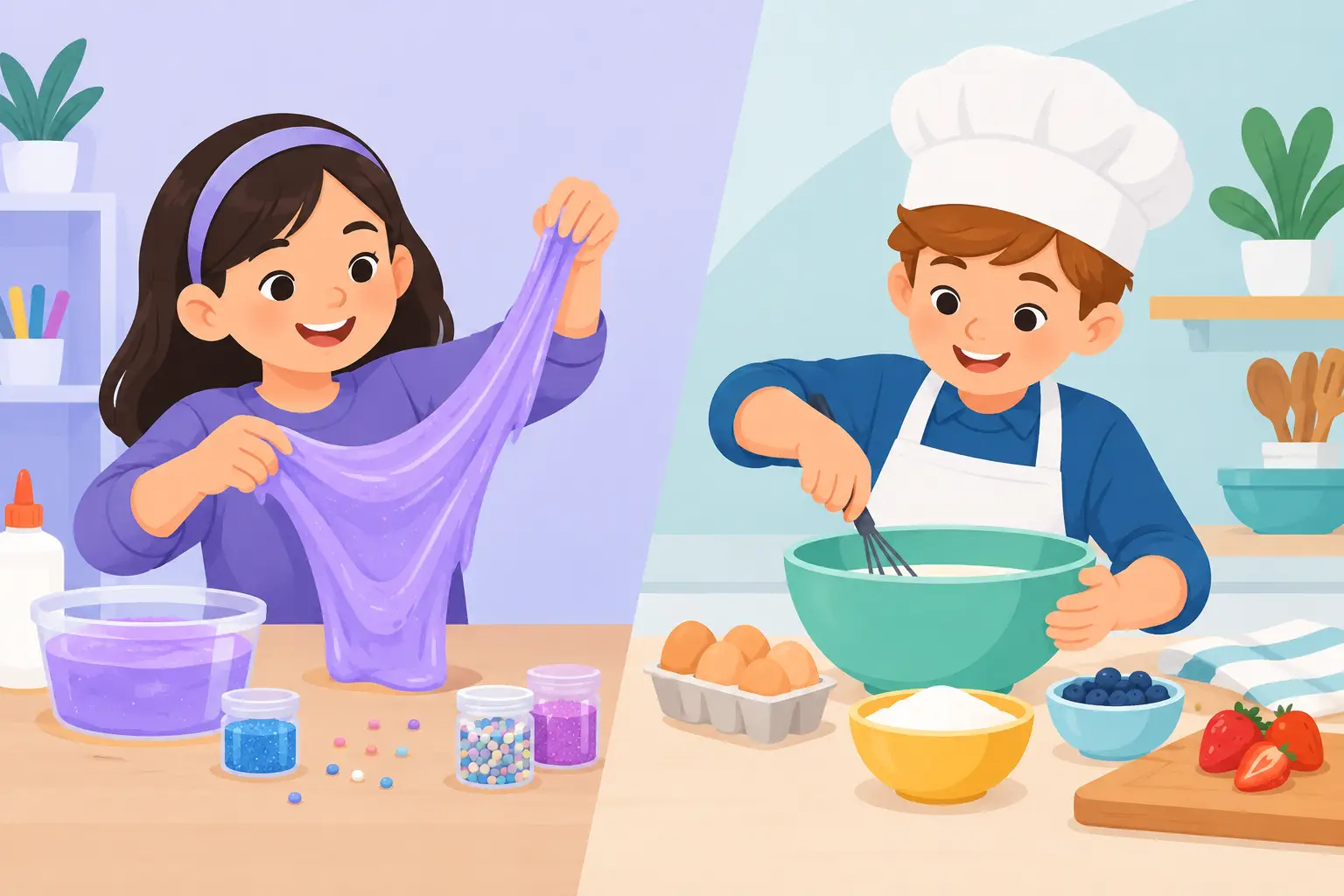
The big question behind a slime workshop versus cooking class is not just, “What will my kid enjoy?” It is, “What kind of memory do we want to make today?” One outing ends with something sweet or savory. The other ends with a custom creation ready to stretch, squish, show off, and play with long after the fun is over.
Both can be wonderful screen-free activities for kids. Both offer a chance to make something with their hands, try new things, and feel proud of the result. But when you are choosing a birthday party activity, a weekend treat, a playdate plan, or a group outing, the details matter. Attention spans, allergies, cleanup, ages, timing, and the kind of fun your child actually loves can all change the answer.
Slime Workshop Versus Cooking Class: The Main Difference
A cooking class is usually built around a recipe. Kids measure, mix, follow steps, wait for ingredients to bake or chill, then eat or take home the finished food. It can be a great fit for children who are curious about flavors, enjoy helping in the kitchen, or love the idea of becoming a tiny chef.
A slime workshop is built around creative choice and sensory play. Kids can start with a base, then layer in color, scent, texture, charms, foam beads, glitter, and other mix-ins until the slime feels completely theirs. There is no single “right” answer. One child may make a glossy bubblegum-pink slime with sprinkles, while another goes for a cloud-like blue creation packed with crunchy texture.
That difference changes the energy in the room. Cooking often rewards patience and following directions. Slime-making rewards experimenting, customizing, and reacting in the moment: Is it stretchy enough? Does it crackle? Should it be fluffier? More sparkly? The experience is hands-on from the first scoop to the final swirl.
Which Activity Keeps Kids Engaged Longer?
For younger kids, the wait is often the deciding factor. A cooking class can include several pauses: waiting for dough to rise, a dish to bake, frosting to set, or turns at a workstation. A good instructor can keep things moving, but food preparation naturally has a pace.
Slime is more immediate. Children can mix, stretch, knead, and personalize as they go. That instant feedback makes a slime workshop especially friendly for preschoolers, elementary-age kids, and energetic groups that need a steady stream of hands-on action.
Older kids can enjoy either option, but their interests may look different. A tween who wants to learn real-life skills, recreate a favorite dessert, or try a new cuisine may genuinely prefer cooking. A tween who loves trends, collecting cute things, sensory textures, and making something camera-ready may be all about slime.
The best choice depends on the child, not the calendar. A kid who spends Saturday mornings watching baking videos may light up in a kitchen. A kid who can spend 20 minutes perfecting the texture of a slime at home will probably want more freedom to mix, stretch, and create.
Creativity Has Different Rules in Each Experience
Cooking classes can be creative, especially when kids decorate cupcakes, build pizzas, or customize cookies. But recipes come with limits for a reason. Too much salt can ruin a dish. Skipping a step can mean a flat cake. There is usually a correct order, a specific amount, and a planned final result.
At a slime workshop, the process is more open-ended. Kids can make bold choices without worrying that their creation will fail dinner. They can test color combinations, build a theme, choose a scent, and make decisions based on how the slime looks and feels in their hands.
That creative ownership is a huge win for kids who do not always love structured crafts. There is no pressure to draw perfectly, cut along a line, or copy the sample. Their slime can be extra glossy, totally glittery, wonderfully weird, or inspired by their favorite color, animal, season, or snack.
At The Slime Kitchen, the experience turns that freedom into a polished outing. Guided help is there when kids need it, but the finished slime still feels like their personal masterpiece. That balance is gold for parents: enough structure to keep things easy, enough choice to make every creation feel special.
The Take-Home Factor Matters More Than You Think
Food is fun, but it disappears. A child may proudly eat the cookie they decorated before you are even back in the car. That is not a bad thing. For families who want a tasty treat and a little kitchen confidence, it is part of the appeal.
Slime keeps the fun going. Kids leave with a tactile souvenir they can play with, talk about, and show to siblings and friends. It becomes a tiny reminder of the day they made it. For party guests, that take-home creation can also replace a separate favor bag, which is one less thing for hosts to plan.
There is a practical side, too. A well-packed slime is easy to carry home, does not melt, and does not depend on everyone having the same food preferences. It is a particularly smart option for mixed groups where dietary restrictions might make a food-centered activity more complicated.
What About the Mess?
Let’s be honest: both activities involve mess. Flour finds its way onto sleeves. Frosting gets on faces. Slime can be wonderfully squishy. The difference is where the mess happens and who handles the reset.
At home, cooking can mean dishes, counters, ingredients, and post-baking cleanup. At-home slime can mean supplies scattered across the table and a few moments of hoping nobody steps on a loose foam bead. In a professionally run workshop or class, the setup, materials, and cleanup are part of the experience, so families can focus on the fun.
For a mall outing or a busy weekend, that convenience is a real perk. You get the joy of a hands-on activity without turning your kitchen or dining table into the aftermath zone.
Choosing for Birthdays, Playdates, and Groups
For birthday parties, think about the flow of the event. Cooking classes are great when the menu is the main event and the group is comfortable following a shared recipe. They work especially well for smaller groups that enjoy a calmer, more instructor-led pace.
Slime workshops bring high-energy, social creativity to the table. Guests can chat, compare textures, trade opinions on colors, and celebrate one another’s creations without everyone needing to make the exact same thing. That makes slime a natural fit for parties with mixed personalities and a wide range of creative confidence.
For playdates, slime can also be an easy win because the activity is complete in one visit. There is no need to schedule around baking time or worry about whether the final recipe will appeal to every child. Kids get to make, play, pack up, and head home with something they chose themselves.
School groups and team-building events may lean either way depending on the goal. Cooking can connect to nutrition, culture, and practical life skills. Slime can support sensory exploration, color mixing, creative expression, cooperation, and a shared sense of playful discovery. If the goal is high participation with a big visual payoff, slime has a serious advantage.
When a Cooking Class Is the Better Pick
A cooking class deserves the spotlight when your child is genuinely excited about food. Maybe they want to learn how pizza dough works, decorate pastries, or become more confident helping with family meals. It can be meaningful when the skill itself is the gift.
It may also be the right choice for an older child who is ready for more detailed instructions and likes the satisfaction of producing something edible. Just check the class format before booking. Ask about allergen policies, whether children can work independently, how much waiting is involved, and whether the food is eaten on-site or taken home.
When a Slime Workshop Is the Better Pick
Choose slime when you want an outing that feels colorful, tactile, personal, and instantly exciting. It is ideal for kids who love sensory play, collecting cute creations, mixing unexpected combinations, or making something that does not have to look like anyone else’s.
It is also a strong choice when you need a party activity with built-in entertainment and a take-home keepsake. No recipe cards to keep track of. No pressure for picky eaters. Just a station full of possibilities and a creation that is ready to squish the second it is made.
The right outing is the one that makes your child’s face light up before you even leave the house. If they are dreaming about sprinkles and aprons, book the cooking class. If they are already talking about glitter, scents, and the perfect stretch, fire up their senses with a slime-making day they can keep in their hands.